

The $200 Bearing That Became a $48,000 Emergency
A real-world breakdown of how one ignored signal cascaded into 18 hours of unplanned downtime — and what it teaches us about detection windows.
Published November 6, 2025
Overview
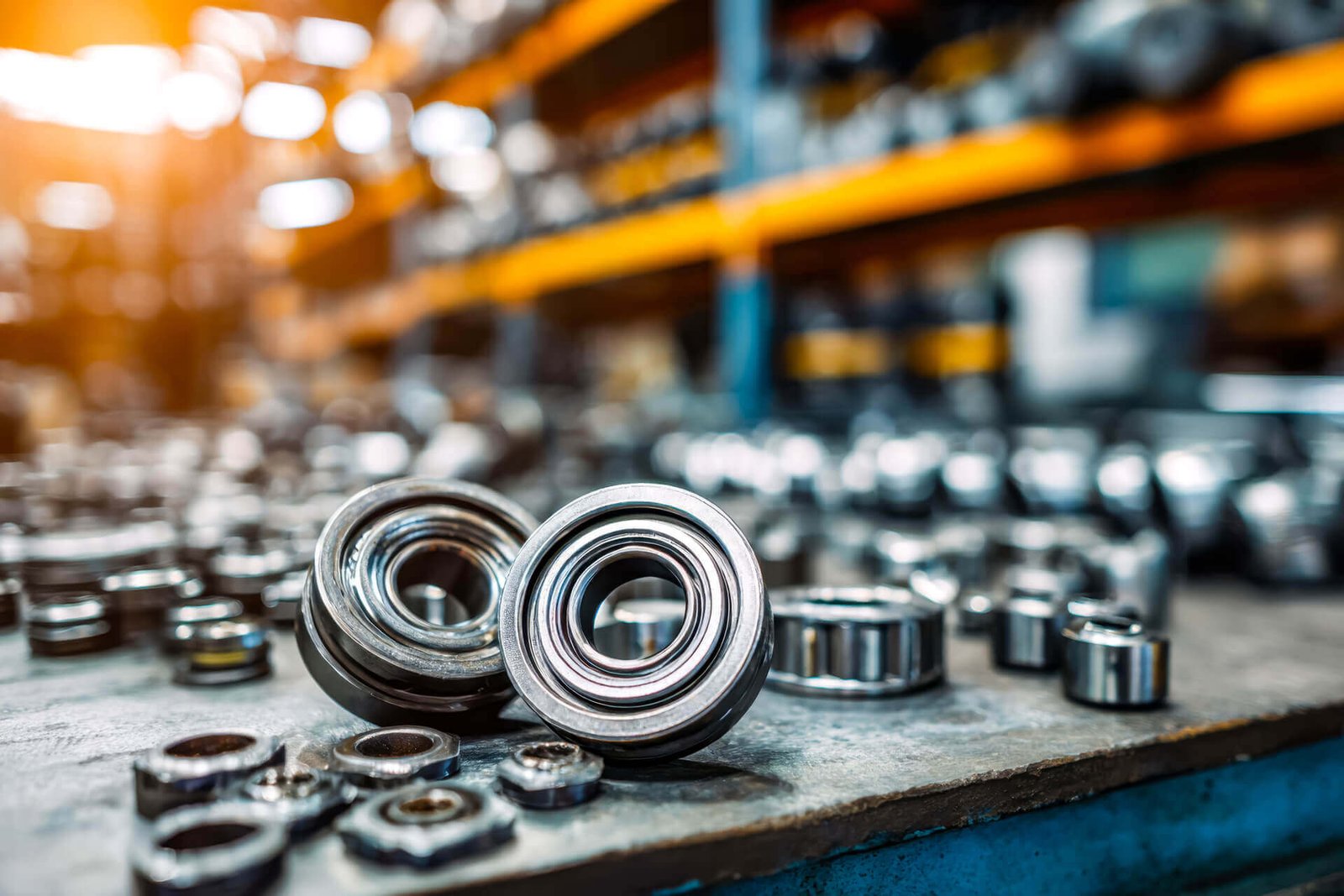
A conveyor bearing started making noise on Monday. An operator mentioned it in passing. Two weeks later, the bearing seized. The failure destroyed the main drive shaft, overloaded the motor, and brought down the entire conveyor during peak production. 18 hours of emergency repair. Total cost: $48,000. The bearing itself? $200 and an hour of planned labor to replace. This is the anatomy of failure escalation and the economics of the detection window.
This case study illustrates
-
How bearing failures progress through multiple stages
-
The real cost breakdown of unplanned downtime
-
Why bearings communicate degradation through four channels
Key takeaways
-
1
Bearing failures escalate through predictable stages, each detectable by human senses. The difference between a $200 repair and a $50,000 emergency is detection timing.
-
2
The real cost of downtime includes emergency parts procurement, overtime labor, lost production throughput, and ripple effects through the operation.
-
3
The gap between signal and action is the real failure point. Organizations need training, vocabulary, and systems to convert early observations into prioritized response.
The Cascade Begins
A conveyor drive bearing started making noise on a Monday. An operator mentioned it in passing during a shift handoff. Nothing was written down. No work order was created. The equipment was still running, production targets were being hit, and the maintenance team was already buried in three other emergencies.
Two weeks later, the bearing seized. The failure destroyed the main drive shaft. The shaft damage overloaded the motor, burning out the windings. The conveyor went down during peak production. Emergency parts had to be sourced overnight. The repair took 18 hours. Total cost: $48,000 — parts, labor, overtime, and lost production.
The Anatomy of Failure Escalation
This story isn't unusual. What makes it worth studying is how clearly it illustrates the physics of failure escalation. A bearing does three things: it reduces friction, supports load, and controls motion. When any of these functions begins to degrade, the bearing communicates that through noise, vibration, temperature, and changes in lubricant condition. These signals don't appear suddenly at failure — they develop over days or weeks, getting progressively louder.
Week 1: A subtle change in sound character. The bearing developed a low rumble that an experienced operator noticed was different from its normal operating tone. At this point, the bearing had minor surface damage — probably early-stage spalling on one of the raceways. A replacement during scheduled downtime would have cost $200 and taken an hour.
Week 2: The sound intensified. Vibration increased to the point where it was noticeable by touch on the housing. Temperature started climbing. Internal damage was accelerating — the initial surface defect was now generating debris that was contaminating the lubricant and creating secondary damage to the rolling elements. A replacement at this stage would have cost maybe $500-800, might have needed a new seal, and could still have been planned.
The failure: The bearing locked up. Sudden seizure transferred massive torque to the shaft, which couldn't absorb it. The shaft fractured. The sudden mechanical imbalance and locked rotor condition overloaded the motor's electrical capacity. Windings burned. Three components destroyed by one bearing that told everyone it was dying for two full weeks.
What $48,000 Actually Buys
The bearing, shaft, and motor components ran about $8,500. Emergency parts procurement — overnight shipping, premium pricing for urgency — added another $3,200. Maintenance labor for 18 hours of emergency repair, including overtime rates and pulling technicians off other planned work, came to roughly $6,800.
Then there's production loss. 18 hours of unplanned downtime on a conveyor that feeds a production line. Depending on the operation, that's somewhere between $25,000 and $30,000 in lost throughput. Add the ripple effects — downstream processes starved for material, upstream processes backing up, shipping schedules missed, customer commitments broken — and $48,000 is actually a conservative number.
All of this from a component that costs $200 and takes an hour to replace when the signal is caught early.
Bearings Talk
Bearings are what reliability engineers call "signal-rich" components. They communicate deterioration through four channels, all detectable by human senses without any special instruments.
Noise is often the first indicator. A bearing operating normally has a consistent sound profile. When degradation begins, the sound changes. Grinding suggests contamination — particles between the rolling surfaces creating abrasive contact. A rumble indicates surface damage, possibly fatigue spalling on a raceway. A squeal points to lubrication distress — the protective oil film is failing, and metal surfaces are nearly touching.
Vibration follows, or sometimes arrives alongside the noise changes. What starts as a subtle roughness you can feel through the housing progresses to distinct shaking that's impossible to miss. The character of the vibration matters — steady roughness suggests widespread surface damage, rhythmic pulsing suggests a geometric issue like misalignment, and increasing amplitude over time tells you the damage is progressing.
Temperature rises as friction increases. A bearing housing that's warmer than it was last week, or warmer than an identical bearing on similar equipment, is telling you that something is consuming more energy than it should. By the time a bearing is hot enough to be obviously abnormal, damage is usually well advanced.
Lubricant condition is the fourth channel. Grease that looks dirty, discolored, or has changed consistency is carrying evidence of what's happening inside the bearing. Milky or cloudy lubricant suggests water intrusion. Dark or carbonized grease indicates excessive heat. Gritty texture means contamination.
The Real Lesson
This isn't a story about a bad bearing. Bearings fail — that's physics. This is a story about a system that let two weeks of detectable signals pass without converting any of them into action.
The operator noticed. The signal was there. What was missing was the training to understand what the signal meant, the language to describe it precisely, and the system to ensure it reached someone who could prioritize a response.
Fix those three things — detection training, signal vocabulary, and reporting discipline — and the $48,000 emergency becomes a $200 planned repair. Not sometimes. Consistently.